CN

NEWS CENTER
banner
Current Position: Home > News > Industry Dynamics > The Effect of Copper Wire Thickness on Motors Can the copper wire in transformers be made as thick as possible?

The Effect of Copper Wire Thickness on Motors Can the copper wire in transformers be made as thick as possible?

2026-01-27 11:24:42
0

The Impact of Copper Wire Gauge on Motors

Can Copper Wire in Transformers Be Made Thicker and Thicker?


The gauge of copper wire significantly influences the performance of motors and transformers. This article examines how wire thickness affects these devices and explains why thicker isn't always better.

微信截图_20260127111054.png

Copper Wire Conductivity and Motor Efficiency


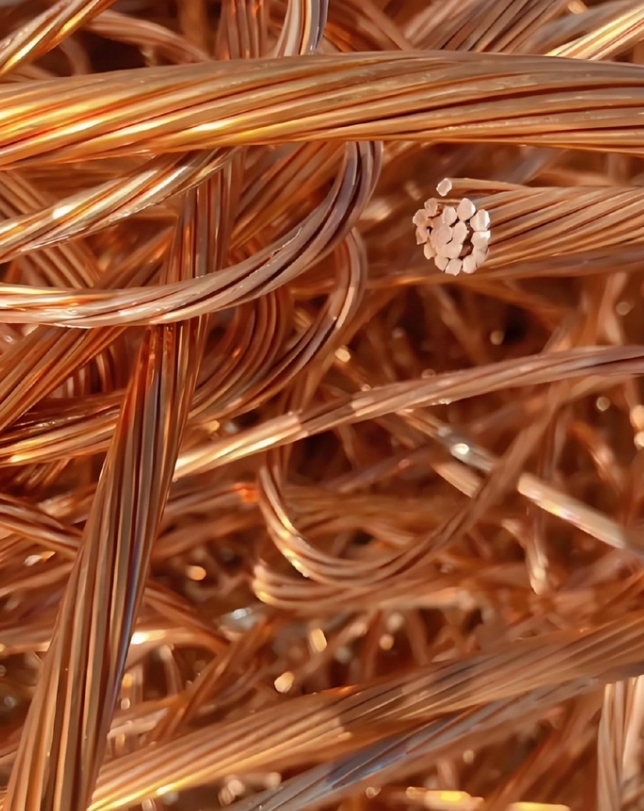
Copper wire is a commonly used conductive material due to its excellent electrical conductivity and thermal conductivity. Thicker copper wire possesses stronger electrical conductivity, enabling more efficient power transmission and reduced energy loss. This means using thicker copper wire in motors and transformers can enhance motor efficiency.


High efficiency is crucial for motors as it reduces energy consumption, lowers motor temperature rise, and extends motor lifespan. Thicker copper wire has lower resistance, thereby reducing line resistance losses and enabling more stable motor operation.


Heat and Current Carrying Capacity of Copper Wire


Beyond conductivity, the thickness of copper wire also relates to current transmission and thermal management. Higher currents flowing through a wire result in greater temperature rise. The thickness of copper wire determines its current carrying capacity. If the wire is too thin, the current may exceed its capacity, leading to overheating and issues like short circuits.


Overheating can cause insulation materials to melt, potentially leading to fire hazards. Therefore, current load must be considered during motor and transformer design, selecting appropriate copper wire sizes based on the required circuit diameter for the current.


Copper Wire Selection and Motor Performance Optimization


During motor design, factors like copper wire size, motor power, dimensions, and cost must be comprehensively evaluated to achieve an optimal balance.


Excessively thick copper wire may increase motor size and cost, as larger cross-sectional areas raise material expenses. Additionally, overly thick wire can complicate installation and maintenance.


Conversely, insufficiently thick wire may degrade motor performance and elevate risks. Thinner wire exhibits higher resistance and is prone to overheating under load, potentially damaging the motor. Therefore, when designing motors and transformers, the appropriate copper wire gauge should be selected based on specific requirements and constraints.


In summary, the gauge of copper wire significantly impacts the performance of motors and transformers. Selecting an appropriate gauge can enhance motor efficiency. Both excessively thick and thin wires may lead to performance degradation and increased risks. Consequently, designing motors and transformers requires comprehensive consideration of multiple factors to achieve an optimal balance.

TAG

Previous Post:
Next Chapter: 电机用注塑磁与烧结磁的对比 2026-01-26

Related Products

Related News

  • Scan Wechat
  • +86 13823531619

  • xhautomatic@foxmail.com