CN

NEWS CENTER
banner
Current Position: Home > News > Industry Dynamics > Primary Factors Causing Vibration and Noise Due to Improper Bearing and Motor Assembly

Primary Factors Causing Vibration and Noise Due to Improper Bearing and Motor Assembly

2026-01-13 11:26:21
0

Primary Factors Causing Vibration and Noise Due to Improper Bearing and Motor Assembly:

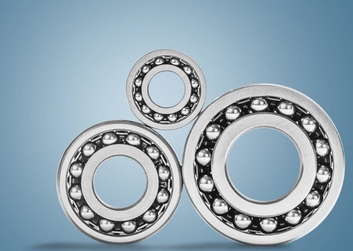
微信截图_20260113112345.png

(1) Magnitude of Bearing Radial Clearance. Bearings possess an inherent radial clearance during manufacturing, determined by the manufacturer. After installation into the motor, the bearing inner and outer rings undergo radial deformation due to specific fit tolerances with the bearing retainer and housing, resulting in reduced clearance. Consequently, a separate operating clearance exists during operation. Experimental studies indicate that an operating clearance of approximately 10 μm yields optimal noise performance. Excessive clearance increases vibration, while insufficient clearance amplifies noise. The difference between operating and original clearance primarily depends on the fit category between the inner ring and bearing retainer, as well as the machining precision of the retainer.


(2) Stiffness of end covers and motor frames. The stator, rotor, and end covers form a vibrating system. Bearings and end covers with poor axial rigidity can “tune” with this system, causing significant axial vibration. This vibration transmits through the bearings to the end covers and the entire motor, generating resonance noise. Simultaneously, electromagnetic noise from the motor also propagates through the bearings to the end covers and the entire motor.


(3) Axial play. Due to electromagnetic forces between the stator and rotor, the presence of axial electromagnetic force components in skewed slots, and cumulative errors from machining and assembly in axial dimensions, some axial play inevitably occurs during motor operation. If improper measures are taken, this can result in a low-frequency “humming” sound that fluctuates in intensity. Adding spring elements (e.g., wave spring plates) in the axial direction can reduce the “humming” sound and stabilize the sound level. It can also significantly reduce vibration. However, it should be noted that the desired effect can only be achieved when the bearings are qualified, other assembly conditions are correct, and the elasticity of the spring elements remains stable.


(4) Bearing Assembly. Bearing assembly quality significantly impacts motor noise, potentially varying by 5-10 dB. During assembly: - Select appropriately specified grease. - Maintain cleanliness to prevent contamination from iron filings, fine sand, dust, or other debris. - Ensure proper grease filling quantity. - Insert bearings into housings by hand-pushing; never use hammers. Additionally, the precision and installation of all stop collars ensuring motor coaxiality must be correct. Otherwise, rotor misalignment will also affect the bearing's working clearance.

TAG

Related Products

Related News

  • Scan Wechat
  • +86 13823531619

  • xhautomatic@foxmail.com