CN

NEWS CENTER
banner
Current Position: Home > News > Industry Dynamics > Six Key Points for Improving the Yield Rate of Motor Stator Winding Machines

Six Key Points for Improving the Yield Rate of Motor Stator Winding Machines

2025-11-03 16:56:38
29

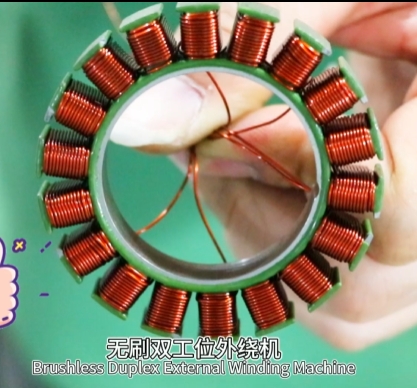
In the manufacturing process of electric motors, stator winding is the core operation that determines product performance and reliability. Issues such as uneven wire arrangement, wire breaks, wire damage, and inconsistent tension not only impact production efficiency but also lead to quality hazards like excessive motor temperature rise, insulation failure, and increased vibration and noise.


微信截图_20251103165913.png


To achieve stable production with high yield rates, systematic optimization is required at both equipment design and process control levels. Based on extensive R&D and production experience with automated motor assembly lines, we have identified six critical control points for enhancing stator winding machine yield rates. These key points have become industry-standard technical benchmarks and represent core dimensions requiring close attention during equipment selection and acceptance.


I. Constant Tension Closed-Loop Control: Ensuring Stable Tension During Winding


Tension fluctuations during winding are the primary cause of uneven coil tightness, interlayer collapse, or enameled wire breakage. Especially during high-speed winding, tension can vary significantly as bobbin diameter changes.


Key Control Point: Employ an electronic tension controller paired with a tension sensor to form a closed-loop feedback system, enabling real-time adjustment of output tension.


II. High-Precision Wire-Laying Mechanism: Achieving Micron-Level Wire Positioning


Wire-laying accuracy directly impacts coil uniformity, slot fill rate, and end-form quality. Deviations can cause issues like slot bridging or excessive stacking thickness.


Key Control Point: Achieve micron-level resolution through servo motor drive with precision ball screws or synchronous belt transmission. Concurrently, incorporate follow-up control to ensure strict synchronization between wire-laying speed and spindle rotation, preventing “wire buildup” or “wire omission.”


III. Wire Damage Prevention Structure: Safeguarding Enameled Wire Insulation Integrity


Damage to the enameled wire insulation layer can easily cause inter-turn short circuits during subsequent varnishing or operation, leading to batch failures.


Key Control Points: Wire contact components (e.g., nozzles, guide wheels, feed holes) should use hard alloy or smooth coated materials. Edges should be rounded. The winding path should be as straight as possible, minimizing bending angles to avoid scraping by metal burrs or sharp edges.


IV. Automatic Wire Break Detection and Shutdown Protection: Preventing Ineffective Operations


If a wire break goes undetected and the equipment continues running empty, it results in significant material and labor waste.


Key Control Points: Install wire break sensors along the winding path. Upon detecting a break, the system should automatically shut down, trigger audible and visual alarms, and display fault information on the HMI for rapid troubleshooting.


V. Automatic Wire Loading and Start-Up Behavior: Ensuring Precise First-Turn Slot Entry


In traditional manufacturing, manual wire loading risks inaccurate positioning and loosening, primarily causing first-turn misalignment and slot skipping.


Key Control Points: Configure pneumatic wire clamping mechanisms or vision-assisted positioning systems to automatically guide the wire end into the designated slot and secure it.


VI. High-Rigidity Mold and Stable Clamping: Ensuring Dynamic Balance During Winding


Insufficient mold precision or unstable clamping during winding can cause vibration-induced displacement of the stator at high speeds, leading to wire misalignment.


Key Control Points: Molds should employ high-precision machining processes. Clamping mechanisms may utilize spring-loaded or hydraulic locking methods with adjustable clamping force to accommodate varying stack thicknesses and outer diameters. For larger stators, auxiliary support structures should be added to enhance overall rigidity.

TAG

Related Products

Related News

  • Scan Wechat
  • +86 13823531619

  • xhautomatic@foxmail.com