The Crucial Impact of Enamelled Wire Selection on Motor Performance
Enamelled wire is the core material of motor windings. Parameters such as wire gauge, enamel coating grade, temperature resistance, insulation, flexibility, conductor material, breakdown resistance and ageing resistance directly determine the motor’s efficiency, temperature rise, service life, voltage withstand capability, overload capacity, NVH and operational stability. These are explained in detail below.
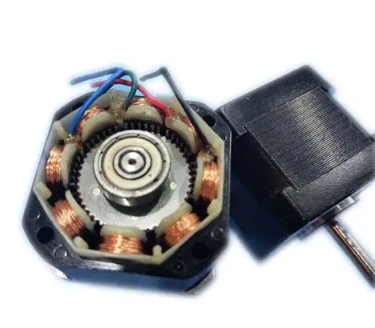
I. Conductor Specifications (Wire Diameter / Cross-sectional Area / Material) — Impact on Load, Efficiency and Heat Generation
Wire Cross-sectional Area (Wire Diameter)
Small wire diameter: Increased resistance, higher copper losses, elevated temperature rise, reduced rated load; prone to overheating and ageing during long-term operation; prone to overheating and burning of windings under high-current conditions.
Excessively large wire diameter: Resistance decreases, copper losses are reduced, temperature rise is low, overload capacity is high, and motor efficiency is improved; however, slot fill rate increases, making winding more difficult, and insufficient slot space may lead to difficulties in removing the wire or insulation being squeezed and damaged.
Conductor Material (Pure Copper / Aluminium / Copper-clad Aluminium)
Pure copper wire: High electrical conductivity, low resistivity, good thermal conductivity, high mechanical strength; results in high motor efficiency, low temperature rise and long service life; the standard specification for mainstream industrial motors.
Aluminium wire / Copper-clad aluminium: High resistivity, high heat generation, poor efficiency, low tensile strength; used only in low-cost, low-end motors; high failure rate during long-term operation.
II. Temperature Rating (130/B, 155/F, 180/H, 200/N, 220/C) — Affects temperature rise, service life and overload capacity
The temperature rating of enamelled wire determines the maximum permissible long-term operating temperature of the motor:
The lower the temperature rating: under conditions of high ambient temperatures, continuous overload, or low-speed high-torque operation, the enamel coating will age rapidly, become brittle and crack, leading to insulation failure and short-circuiting of the windings.
High-grade enamelled wire (Class H and above):
Allows for higher temperature rises, with significantly improved overload capacity and stability during continuous operation;
Suitable for variable-frequency motors, high-speed motors, enclosed environments, and motors operating in high-temperature conditions;
Delays insulation ageing and extends the motor’s service life many-fold.
III. Insulation Varnish Film Properties (Dielectric Strength, Breakdown Resistance, Solvent Resistance, Moisture Resistance) — Affecting Insulation Reliability and Failure Rate
Breakdown Voltage / Varnish Film Thickness
Thin varnish film: Favourable for slot fill rate, but poor voltage resistance; prone to inter-turn and inter-phase breakdown and short circuits, particularly susceptible to inter-turn breakdown under high-frequency pulse voltages in variable-frequency motors.
Thickened varnish film / composite varnish film: Strong inter-turn insulation and resistance to impulse voltage; suitable for variable-frequency drive and high-voltage motors; resistant to corona discharge and high-frequency spike voltages.
Resistance to moisture, oil contamination and chemical corrosion in industrial environments characterised by humidity, dust, oil and corrosive conditions (water pumps, chemical processing, outdoor motors): standard enameled wire coatings are prone to hydrolysis, peeling and electrical leakage; specialised enameled wire resistant to refrigerants, oil and moisture can prevent insulation degradation and ground fault issues.
IV. Mechanical Properties (Flexibility, Adhesion, Scratch Resistance, Tensile Strength) — Affecting Production Yield and Operational Vibration Reliability
Poor coating adhesion and scratch resistance: The coating is prone to scratching and peeling during the wire embedding, winding and shaping processes, creating potential hazards for inter-turn short circuits.
Insufficient flexibility and ductility: Cracking is likely to occur during high-speed winding and tight wire arrangement; Following prolonged motor vibration and thermal cycling, the varnish film becomes brittle and fails.
Directly related to: motor mass production pass rate and long-term insulation stability under vibration conditions; indirectly affects motor repair rates.
V. Inverter-specific characteristics (corona resistance, high-frequency pulse resistance) — Suitable for inverter-driven motors
Standard enamelled wire cannot withstand the high-frequency pulses and voltage spikes generated by inverter PWM:
This readily causes localised corona discharge, eroding the varnish coating, leading in the short term to inter-turn insulation ageing, arcing, phase loss and burnout;
Corona-resistant enamelled wire for inverter applications is key to the stable operation of inverter motors and servo motors, directly determining the service life of inverter motors.
VI. Slot Fill Ratio and Winding Process Matching — Affecting Heat Dissipation and Structural Safety
For the same slot cavity:
Fine wire + thin varnish coating: High slot fill ratio allows for increased turns, suitable for low-voltage, high-torque designs; however, heat dissipation space is reduced, leading to poorer heat dissipation.
Thick wire + thick enamel coating: Slot fill rate is limited, but heat dissipation gaps are reasonable, resulting in better ventilation and heat dissipation; suitable for high-power, high-temperature rise operating conditions.
Selection Recommendations (Common Motor Applications)
1. Standard mains-frequency industrial motors: Preferably use Class F/H pure copper polyester / polyester-imide enamelled wire;
2. Variable-frequency / servo high-speed motors: Must use corona-resistant composite enamelled wire;
3. High-temperature, enclosed, heavy-duty continuous operation: Upgrade to Class C ultra-high-temperature-resistant enamelled wire;
4. Water pumps, outdoor damp environments: Select enamelled wire with specialised moisture- and hydrolysis-resistant coatings.