The core requirement for the winding of high-performance fan motors is to meet the performance criteria of high speed, high current and low loss. This necessitates a multi-dimensional approach to matching power and speed targets, taking into account wire gauge selection, turn count design, and winding connection and arrangement methods. The specific requirements are as follows:
Design Principles for Core Parameters
1. Select wire gauge to accommodate high current carrying capacity
High-performance fans are designed for high power and high-speed output, and the wire gauge directly determines the current carrying capacity:
According to Joule’s Law, higher currents require conductors with a larger cross-sectional area to reduce heat loss. High-power high-performance motors typically employ thicker conductors or multi-strand parallel winding to prevent overheating that would limit output power. Taking the Delta GFC0812DW high-performance fan as an example, an 8A current load necessitates the use of conductors with a gauge of 18 AWG or larger to withstand the current demands of a 96W high-power output.
Wire resistance is inversely proportional to cross-sectional area; the thicker the wire, the lower the resistance and copper loss, resulting in higher actual output power, allowing more electrical energy to be converted into airflow rather than heat.
2. Winding design balances electromotive force and magnetic flux
The number of winding turns must be strictly matched to the motor voltage and the magnetic circuit of the core to avoid power loss:
According to Faraday’s law of electromagnetic induction, a higher number of turns results in a greater induced electromotive force. However, when the supply voltage is fixed, too many turns will cause the current to decrease and the electromagnetic torque to drop, subsequently reducing power output; conversely, too few turns will cause the current to become excessive, leading to overheating of the windings, which similarly limits the output power. The number of turns must be matched to the core magnetic flux to prevent core saturation, as saturation significantly increases iron losses, reduces efficiency, and indirectly reduces actual output power. For ultra-high-speed high-performance fans operating at 130,000 rpm, the turn design must allow for sufficient power headroom to ensure stable rotational speed under load conditions.
Requirements for Winding Structure and Connection Methods
1. Winding Connection Methods Suitable for Different Voltage Scenarios
Different voltage scenarios require corresponding connection methods to match the power output:
Star (Y) connection: The phase voltage is 1/√3 of the line voltage, and the phase current equals the line current. This is suitable for low-voltage, high-current handheld portable high-performance fans.
Delta (△) Connection: Phase voltage equals line voltage, and phase current is 1/√3 of the line current. For the same motor, the rated power in a delta connection is typically higher than in a star connection, making it more suitable for high-voltage, industrial-grade high-power cooling fans.
2. Winding Arrangement to Reduce Losses and Improve Efficiency
Distributed windings are more suitable for high-performance fans than traditional concentrated windings:
In centralised windings, the coils are concentrated on a few teeth; whilst the structure is simple, the magnetic field waveform is significantly distorted, resulting in high harmonic content. This increases iron and copper losses, reducing efficiency and power density, and is therefore only suitable for low-cost, low-power products.
Distributed windings produce a smoother waveform and lower losses, enhancing stability during high-speed operation; they are the mainstream choice for mid- to high-end, high-speed high-performance fans.
Special material and process requirements
If aluminium wire is used as a substitute for copper wire, specific process requirements must be met:
Wire of the same diameter cannot be used as a direct replacement; thicker aluminium wire must be used to offset the higher resistivity of aluminium and ensure the current-carrying capacity meets standards. This will increase the volume of the winding, necessitating a redesign of the motor structure.
Aluminium wire is prone to oxidation, so copper-aluminium transition treatment must be applied to external terminals, whilst internal connections must utilise automated machine crimping to ensure comprehensive sealing and insulation. As aluminium wire is hard and has poor ductility, automated machine winding must be employed to avoid performance inconsistencies caused by manual winding variations.
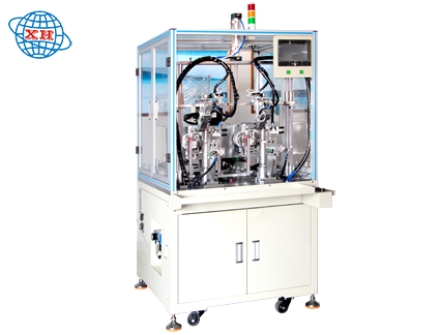
Recommendations for Mass Production Winding Equipment
When mass-producing high-performance fan motors, winding machines must meet three core requirements:
l Give priority to manufacturers with a long history and strong R&D capabilities to ensure mature technology and processes, and the ability to support customisation for special winding methods.
l High winding precision and even wire distribution are required to ensure stable high-speed operation of the motor and reduce the defect rate of finished products.
l The manufacturer must provide timely after-sales service to avoid production downtime due to equipment failure during peak production seasons, which could impact production capacity.