CN

NEWS CENTER
banner
Current Position: Home > News > Industry Dynamics > Three key inspection items for the magnets in brushless motors

Three key inspection items for the magnets in brushless motors

2026-05-20 15:39:30
16

As the core magnetic component of an electric motor, the performance of the motor magnets not only affects the motor’s efficiency, rotational speed and output torque, but also impacts the overall stability and service life of the unit. Therefore, it is essential to inspect motor magnets prior to use. So, what are the key inspection items for motor magnets?

微信截图_20260520153827.png

Firstly, there is the high-temperature stability test. Many motors operate for extended periods in environments characterised by high temperatures, high rotational speeds and alternating magnetic fields. If the magnets lack sufficient heat resistance, they are prone to magnetic decay or even irreversible demagnetisation, leading to a reduction in motor power and efficiency. Consequently, high-temperature stability testing is a crucial aspect of motor magnet evaluation, typically comprising: open-circuit magnetic decay testing, semi-open-circuit magnetic decay testing, high-temperature demagnetisation curve testing, and long-term ageing stability testing. Particularly in applications such as new energy vehicle drive motors and high-speed motors, the requirements for high-temperature stability are even more stringent; these magnets must undergo more rigorous temperature resistance verification to ensure they maintain stable magnetic performance during long-term operation.


Another key aspect is magnetic flux uniformity testing. It is not sufficient for motor magnets to simply ‘possess magnetic force’; what is more critical is the magnetic flux consistency between each individual magnet. If the magnetic flux deviation is too great, this can easily lead to: increased motor vibration, increased noise, torque fluctuations, insufficient output, and reduced motor efficiency. The industry generally requires magnetic flux deviation to be controlled within 5%, whilst high-precision servo motors, drone motors, and high-speed motors have even higher consistency requirements, often needing to be controlled at around 2%–3%. To achieve stable consistency, manufacturers typically need to control residual magnetism consistency, dimensional tolerances, chamfer dimensions, magnetisation direction and material batch consistency.


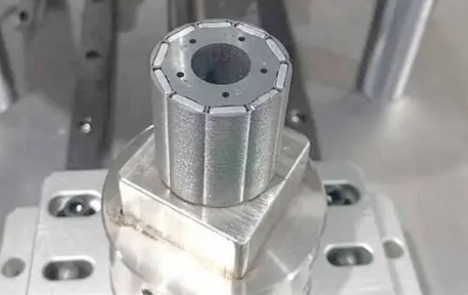
Next comes assembly compatibility. For products such as wafer-shaped magnets and multi-pole ring magnets, mere dimensional compliance is insufficient; actual assembly fit is equally important. For instance, issues such as the precision of the curvature, consistency of angles, uniformity of joint gaps, and the presence of interference after assembly all directly impact motor assembly efficiency and performance. Consequently, many specialist magnet manufacturers utilise dedicated contouring jigs to simulate the customer’s actual assembly conditions, conducting pre-assembly tests on the magnets to verify product compatibility and interchangeability, thereby minimising subsequent assembly issues for the customer.


TAG

Next Chapter: 有刷电机转子多头绕线机 2026-05-18

Related Products

Related News

  • Scan Wechat
  • +86 13823531619

  • xhautomatic@foxmail.com